
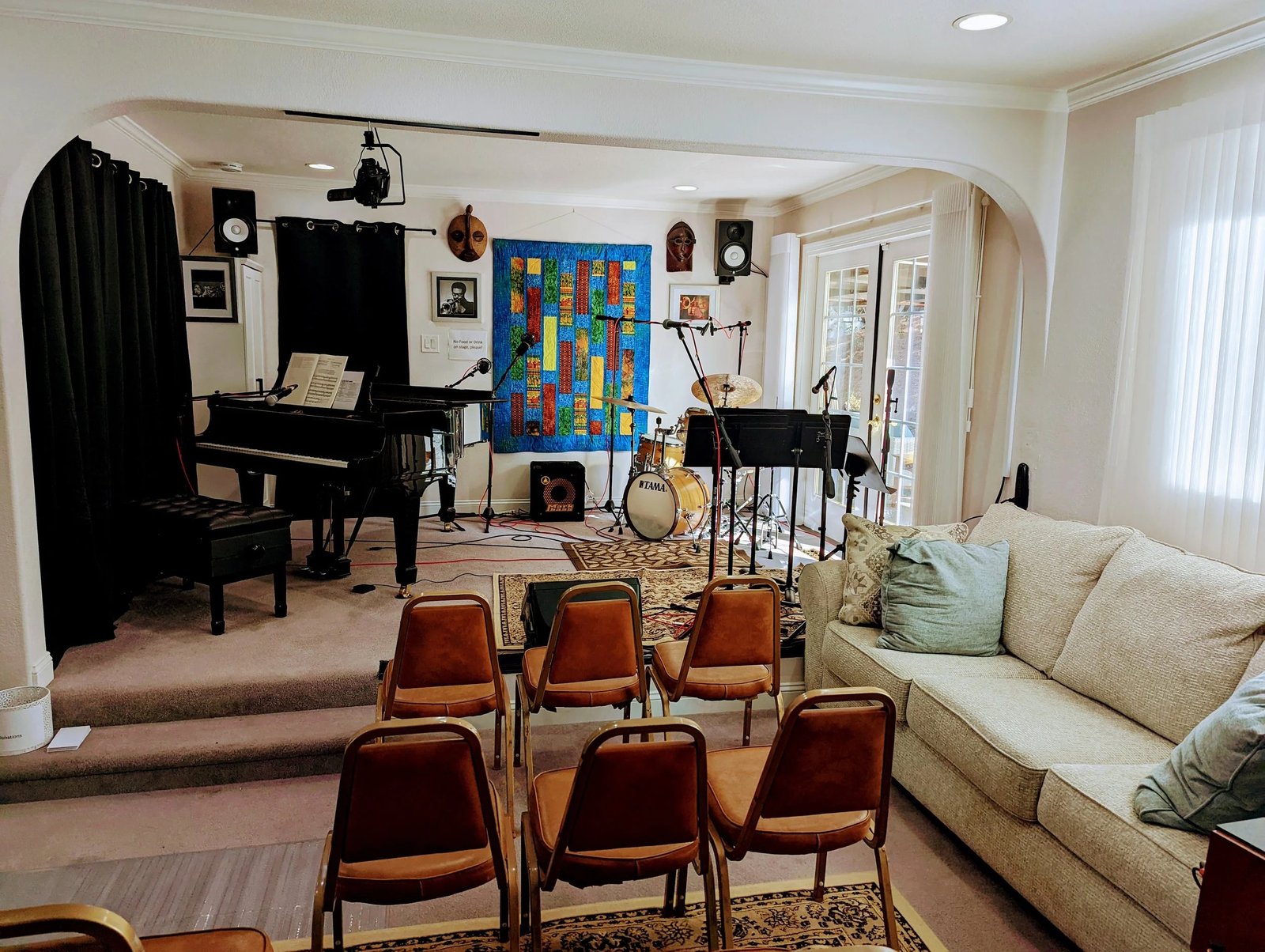
I’ve played major venues. I’ve played festivals. I’ve played concert halls.
But some of the most meaningful performances of my life have happened in someone’s backyard.
Across Atlanta—and across the country—there’s a quiet movement happening in living rooms and gardens. These are home concerts. Not clubs. Not bars. Not commercial venues. Real homes. Real people. Real listening.
They are also a reminder of something I come back to often in Music Life and Times: music improves our lives most when it’s shared in real space with real people.
I’ve had the privilege of performing at both Carrie’s Corner (https://www.carriescornermusic.com/) and Snug Concerts (https://snugconcerts.org/) here in Atlanta. They’re different in style, but they share one powerful trait: the audience comes to listen.
Carrie’s Corner hosts concerts in a backyard setting just outside the city. People bring chairs and blankets. There’s no bar noise. No televisions. No one talking over the music. Suggested donations go directly to the artists. It feels less like a show and more like a gathering. Snug Concerts curates intimate performances in small spaces around Atlanta—gardens, yards, and unconventional venues. The atmosphere is relaxed but attentive. People are present. You can see faces. You can hear breath.
As a performer, that changes everything.
The Difference Listening Makes
In a club, you project. In a house concert, you connect.
When people are six feet away and fully engaged, you play differently. You take more risks. You try something new. The music becomes a conversation instead of a broadcast. And the audience feels it. After these concerts, people don’t rush out to beat traffic. They stay. They talk. They meet each other. Over time, they begin to recognize familiar faces. A small community forms—not because of marketing, but because of repeated shared experience.
That kind of connection sits at the center of what Music Life and Times explores: the idea that music isn’t just something we hear—it’s something that shapes how we live together.
A National Movement in Small Rooms
Atlanta isn’t unique in this. These concerts are part of a much larger ecosystem.
In Orlando, a long-running house-concert series known as The White House (https://www.houseconcert.com/hosts/orlando/) has hosted touring musicians for years. Like many house concerts, it operates through invitation lists and personal networks rather than traditional ticket platforms. The address is shared privately. The audience sits quietly. Donations go directly to the performers.
Across the country, artists travel through similar living-room circuits—private homes, small backyard stages, intimate gatherings where listening is the primary activity.
National organizations help connect hosts and musicians, including:
- Groupmuse — https://www.groupmuse.com/
- Sofar Sounds — https://www.sofarsounds.com/
- Concerts in Your Home — https://www.concertsinyourhome.com/
- Folk Alliance International — https://folk.org/
- House Concert European Hub — https://www.houseconcert.eu/
Some are formal networks. Others are looser communities. But they share a philosophy: bring music back into human-scale spaces.
Why This Model Works
Home concerts solve several modern problems at once.
For artists:
- Direct, fair compensation
- An attentive audience
- The chance to build long-term relationships
For listeners:
- A distraction-free environment
- Meaningful conversation
- A sense of belonging
For communities:
- Cultural life not dependent on commercial venues
- Repeat gatherings that build continuity
- A way to support creative work directly
Streaming gives us access to everything, but it often isolates us. We listen alone. We scroll. We skip. House concerts reverse that pattern. They slow the experience down. In a living room, you can’t skip the quiet moment. You can’t scroll past the ballad. You’re in the room. And being in the room changes you. That change—small but cumulative—is exactly the kind of improvement in daily life that music quietly offers when we give it our attention.
What Changes in the Room
When I play in a home setting, I notice subtle things.
The audience breathes with the music. They hear the soft passages. They catch the humor in a phrase. The space itself shapes the performance. There’s no stage lighting separating performer from listener. The room feels shared. That shared presence lingers after the music ends.
People leave feeling energized, calmer, more connected. Musicians leave feeling valued instead of processed. Hosts feel like participants in culture rather than consumers of it. This is not nostalgia. It’s practical. It’s sustainable. And it’s quietly growing.
Could You Start One?
Many people assume you need a venue license, a sound system, or a business plan to host music.
You don’t.
You need:
- A living room or yard
- Twenty to forty chairs
- A simple donation model
- Clear expectations about listening
That’s it.
Most successful house concerts begin with someone who loves music and wants to share it. Over time, mailing lists grow. Friendships form. Musicians return. The room develops its own identity.
If you’re curious, explore one of the networks listed above. Attend a show. See how it feels. Talk to a host. You might discover that what seems informal is actually deeply intentional.
The Quiet Power of Small Rooms
We often assume cultural impact comes from big stages and big crowds. But some of the most meaningful cultural work happens quietly, repeatedly, in private spaces.
A backyard in Atlanta.
A living room in Orlando.
A garden under string lights.
These rooms don’t look like institutions. But they sustain artists. They build friendships. They create continuity. When people gather to listen—really listen—music does what it has always done best.
It brings us closer. It steadies us. It reminds us we’re not alone in the room.
And in those moments—small, shared, and human—you can feel something simple but real: Music makes life better.