
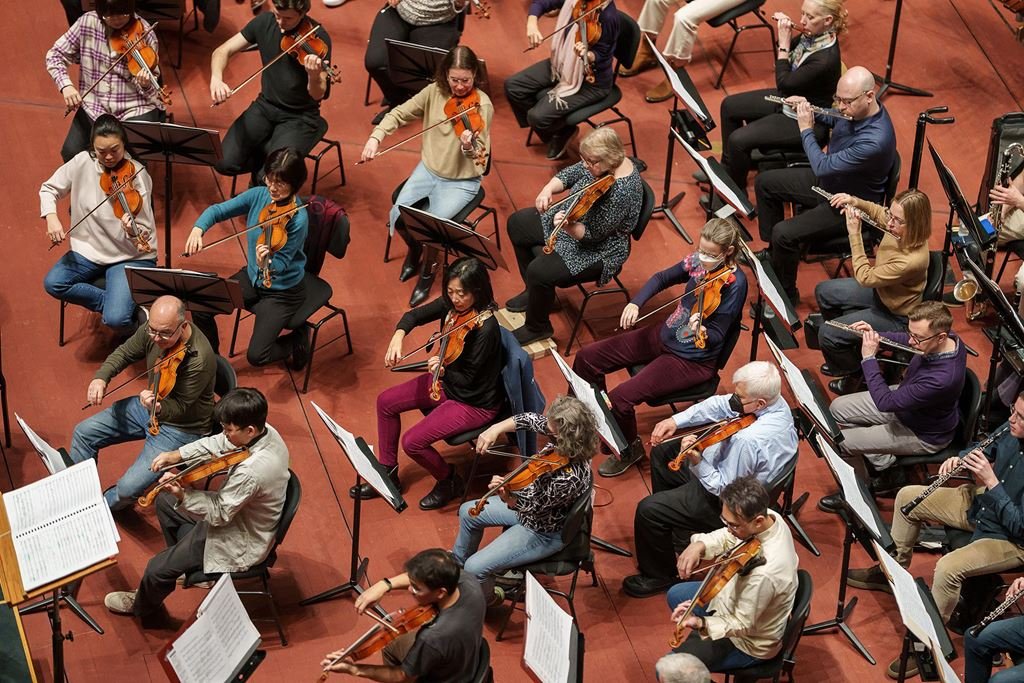
In many communities, music programs are described in terms of enrichment. They add color to school life. They support creativity. They build skills. All of that is true. But there’s another way to think about making music together: as a form of everyday civic practice. When people rehearse, listen, and adjust to one another in real time, they’re not just learning notes. They’re learning how to function inside a group.
A recent article from music-education advocates makes this point clearly. It argues that ensemble music helps develop responsibility, awareness, and connection—qualities that extend far beyond the rehearsal room. Music becomes a way of practicing how to live alongside other people.
Source article:
https://nafme.org/blog/lets-go-go-music-community-and-social-responsibilities/
The idea is simple but powerful. In an ensemble, every player matters. If one person rushes, the group feels it. If one person listens more closely, the whole sound improves. That dynamic creates a shared accountability. Musicians learn to notice not just their own part but the collective result. Over time, that habit of listening and adjusting carries into other areas of life.
Research in arts education has consistently shown that students involved in group music-making report higher levels of belonging and engagement. They develop a sense that their contribution affects the outcome. That awareness can translate into a broader understanding of community responsibility.
Overview of arts education and civic engagement:
https://www.brookings.edu/articles/how-the-arts-can-help-communities-thrive/
What’s often overlooked is how ordinary this process is. It doesn’t require elite training or exceptional talent. A beginner band, a community choir, or a neighborhood jam session all create similar conditions. Participants learn to wait their turn, to listen across differences, and to work toward a shared goal that no one person controls. Those are civic habits as much as musical ones.
Organizations like the National Association for Music Education (NAfME) have been emphasizing this broader role for years. Their work highlights how music programs can support not just artistic growth but also social development and community awareness.
More about NAfME’s initiatives:
https://nafme.org/
In practical terms, ensemble music offers a model of cooperation that’s both structured and flexible. There’s a score or a form to follow, but within that framework, individuals have room to express themselves. The balance between individual voice and group cohesion mirrors the challenges of civic life. How do you contribute something personal while remaining attentive to the needs of the whole? Music provides a space to practice that question regularly.
There’s also an accessibility factor. Not everyone participates in sports or debate teams or formal leadership roles. But many people can join a choir, band, or informal music group. These ensembles create entry points into shared activity that don’t depend on prior status. They allow people from different backgrounds and skill levels to work together toward a common sound.
Community-based music programs around the world have used this approach to bring people together across age, culture, and experience. From youth orchestras to neighborhood drumming circles, the pattern repeats: people gather, make sound, and gradually form connections. The music itself matters, but so does the structure around it. Rehearsal schedules, shared goals, and mutual listening create a framework where relationships can develop.
A look at community music initiatives globally:
https://www.communitymusic.org/
For educators and musicians, this perspective shifts the emphasis from performance outcomes to process. Concerts and recordings are important, but the weekly act of making music together may have a deeper impact. It teaches patience. It builds trust. It reinforces the idea that individual effort contributes to collective results.
In a time when many interactions are fragmented or mediated by technology, ensemble music offers a rare experience of coordinated, in-person attention. People hear each other in real time. They respond. They adjust. The result is not just a finished piece of music but a shared understanding of how to work together.
That’s why music programs often become central to a school or community’s identity. They provide a consistent space where people gather with a purpose. Over months and years, those gatherings create networks of support and familiarity. Participants come to recognize one another not just as players but as collaborators in a shared project.
Seen this way, making music together isn’t an extracurricular activity. It’s a small but meaningful rehearsal for civic life. It models the kind of listening, cooperation, and responsibility that communities depend on. And it does so in a way that feels natural rather than instructional. People show up to play or sing. In the process, they learn how to be part of something larger than themselves.
When an ensemble finds its balance, the sound reflects it. No single voice dominates. No one disappears. The music holds everyone in a shared moment of attention. And for a while, at least, the idea of community becomes audible.